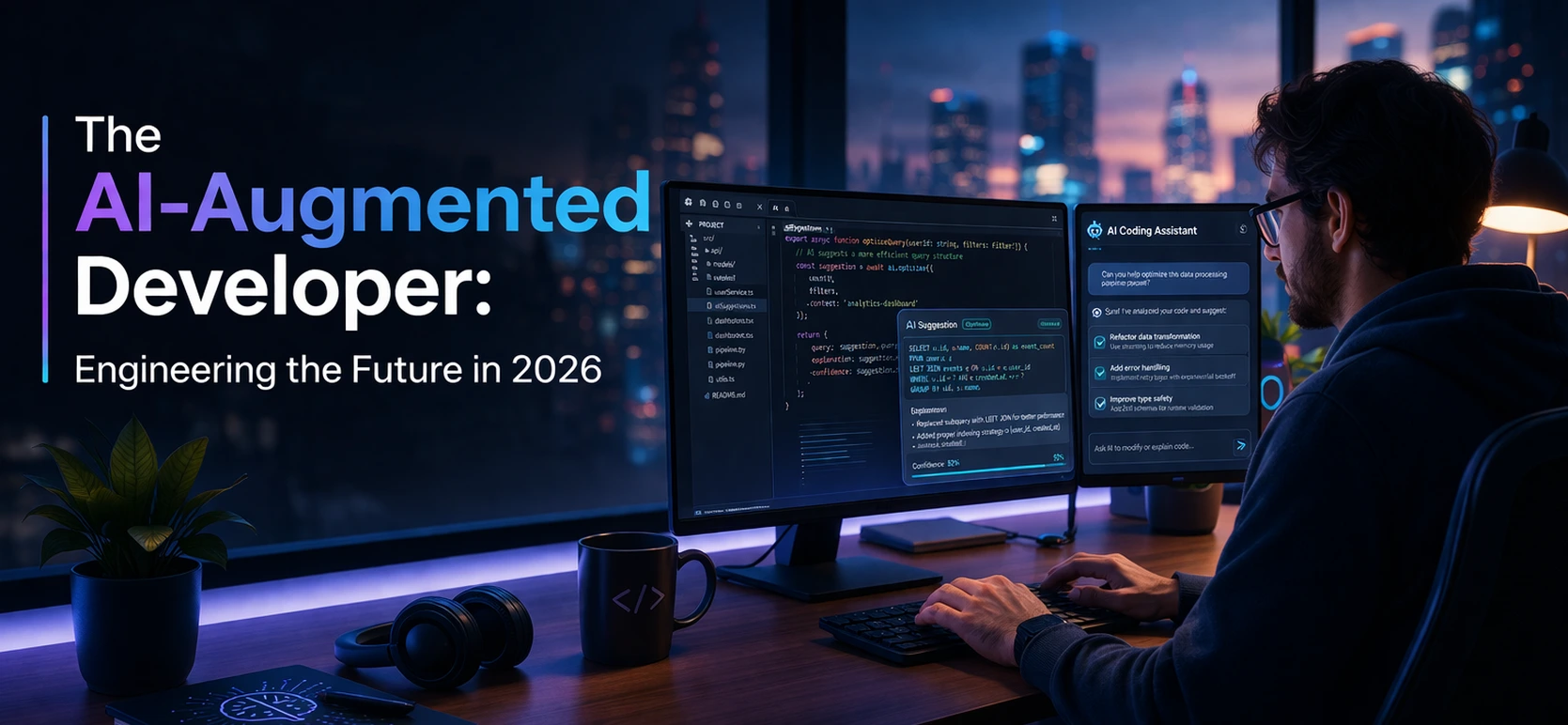
In 2026, the debate over whether AI will replace developers has officially ended. Instead, we have entered the era of the “Orchestrator,” where human creativity directs a symphony of intelligent agents to build software at speeds once thought impossible.
Beyond Autocomplete: The Rise of Coding Agents
The “ghostwriter” era of simple code completion has evolved into Agentic Development. Tools like Cursor, GitHub Copilot Workspace, and Claude Code no longer just suggest lines of code—they understand entire architectures. Today’s developers can describe a complex feature in plain English, and AI agents will traverse the codebase, modify multiple files, run tests, and suggest a deployment plan.
Vibe Coding and Rapid Prototyping
The emergence of “vibe coding” has redefined the early stages of the SDLC (Software Development Lifecycle). We can now transform a whiteboard sketch or a simple screenshot directly into a functional React or Vue.js frontend in minutes. This allows our team to focus on high-level design judgment and “prompt craft,” moving from initial concept to a working MVP (Minimum Viable Product) faster than ever before.
Automating the “Boring” Stuff
AI has absorbed the repetitive tasks that used to drain creative energy:
- Self-Healing Code: AI-powered observability tools now detect anomalies in real-time and suggest instant patches before they become outages.
- Predictive Testing: Systems automatically generate unit and integration tests for every new feature, ensuring 100% coverage without manual effort.
- Documentation on Autopilot: Technical debt is managed through AI that writes READMEs, commit messages, and API documentation as the code is being written.
The Human Advantage
At Creative Soft Tech, we use these tools to amplify our output, not replace our oversight. In 2026, the value of a developer lies in architectural thinking, ethical governance, and strategic problem-solving. AI provides the power, but human expertise provides the direction, ensuring that every line of code serves a clear business purpose.